

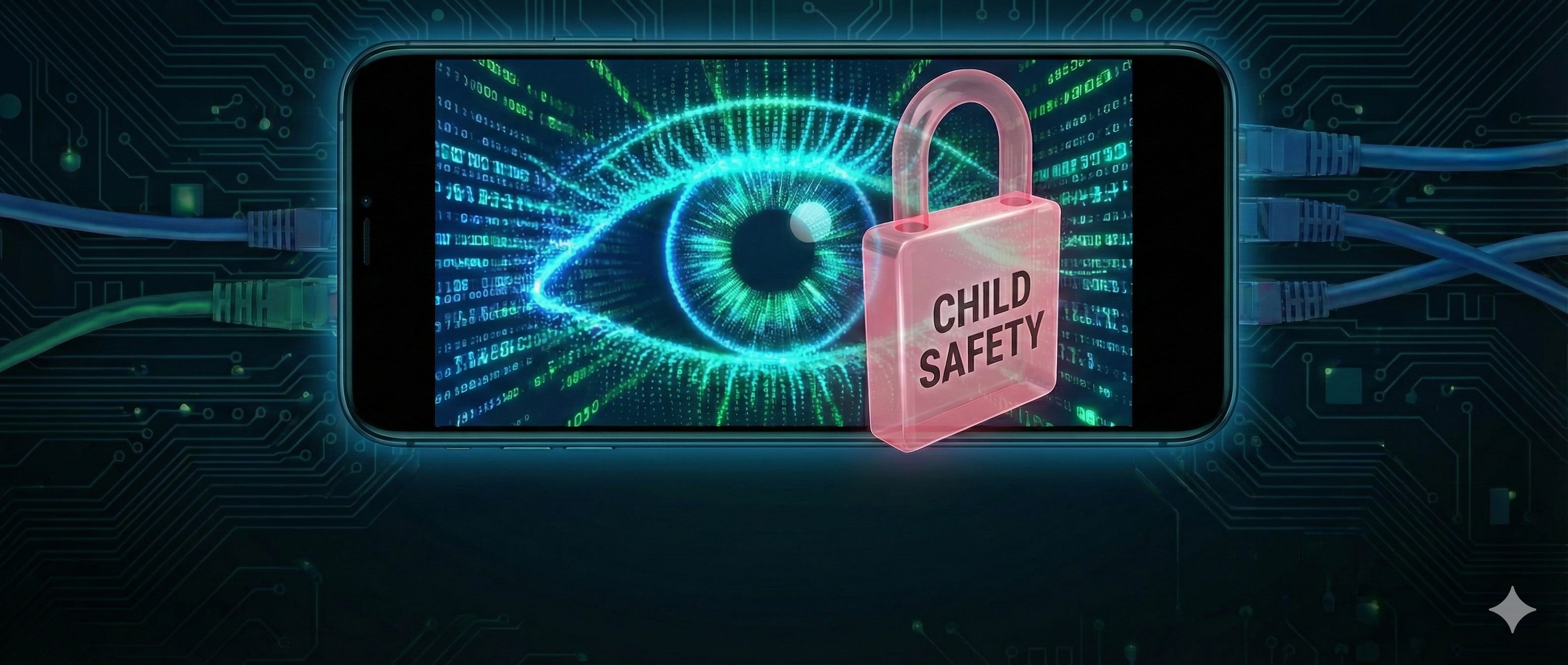
If you want to smuggle a tank into a nursery, you’d better paint it pink and call it a ‘safety vehicle’.
This is precisely the strategy currently being deployed by the UK government with the innocuously named Children’s Wellbeing and Schools Bill.
On the surface, it sounds like the sort of bland, bureaucratic fluff that keeps the civil service employed—databases to ensure kids don’t fall through the cracks, protections for the vulnerable. Who could object? But hidden inside this legislative Trojan Horse are amendments so draconian, so fundamentally invasive, that they would make the Stasi weep with envy.
The establishment, particularly the sanctimonious wing of the so-called liberal elite, has perfected the art of weaponising ‘safety.’ They have realised that if you drape the chains of tyranny in the banner of ‘protecting the children,’ the public will not only accept the shackles—they will thank you for them.
The Sugar Coating
To be clear—and this is crucial—the bill is not without merit. In fact, it contains provisions that any sane person would welcome. It establishes ‘Children Not in School’ registers to ensure vulnerable kids don’t vanish from the education system entirely. It creates better data-sharing protocols (the Single Unique Identifier) so that social services, schools, and the NHS can actually talk to each other before a tragedy occurs. It even promises free breakfast clubs and limits on expensive branded uniforms.
These are genuinely good ideas. They are practical, helpful, and morally sound.
But that is exactly the trap. The establishment knows that if they wrap the chains of tyranny in the unassailable banner of feeding hungry kids and protecting the vulnerable, you will feel like a monster for voting against it. They use the wellbeing of the child as a human shield to smuggle in a surveillance state that treats every adult like a suspect.
The ‘Papers, Please’ Internet
With the moral high ground secured, they are now free to launch their assault on anonymity. A proposed amendment targets Virtual Private Networks (VPNs). The government claims they aren’t banning VPNs—that would be too obvious, too authoritarian. Instead, they are opting for the backdoor route. Under the new rules, downloading or using a VPN would require ID verification.
‘(1) Within 12 months... the Secretary of State must... make regulations which prohibit the provision to UK children of a Relevant VPN Service... (2)(a) make provision for the provider... to apply to any person seeking to access its service in or from the UK age assurance which is highly effective…’
Consider the absurdity: the primary purpose of a VPN is privacy and anonymity. By forcing you to scan your passport to access one, the tool is rendered instantly obsolete. It creates a digital ‘papers, please’ checkpoint at the entrance of the internet.
Why? To ensure children aren’t accessing inappropriate content, they say. The result? Every adult in the UK is treated as a child requiring supervision, their digital movements logged and gated by the state. It is the infantilisation of the populace, codified into law.
The Spy in Your Pocket
But the true horror lies in Clause 27 and its surrounding amendments. The government seeks to mandate that device manufacturers (Apple, Samsung, Google, etc.) install ‘tamper-proof’ software to scan your local files.
‘Any relevant device supplied for use in the UK must have installed tamper-proof system software which is highly effective at preventing the recording, transmitting and viewing of CSAM using that device.’
Read that again. We are not talking about Google scanning images you upload to their cloud servers (which is bad enough but understandable). We are talking about the state mandating a permanent, automated search of the camera roll on the phone in your pocket.
This creates a terrifying new legal precedent: Guilty until proven innocent.
In a free society, the police need a warrant and reasonable suspicion to search your private property. Under this bill, the state assumes you are a potential predator. They demand the right to rifle through your digital drawers, scan your family photos, and analyse your private memes, all without a judge’s signature or a shred of evidence against you. Essentially, should this amendment reach ratification, your phone is no longer your property; it is a government surveillance node that you paid £1,000 for the privilege of carrying.
The Great Regulatory Bonfire
What makes this overreach truly grotesque is the staggering legal hypocrisy. For years, we have been lectured about the sanctity of the GDPR. Small businesses are terrified of sending a marketing email to the wrong person for fear of being fined into oblivion by the Information Commissioner’s Office (ICO). We are told that ‘data minimisation’—collecting only what is strictly necessary—is the golden rule of the digital age.
Yet, with this bill, the government is driving a bulldozer through its own regulation.
Mandatory ID checks for VPNs violate the very core of data minimisation. They require the collection of sensitive biometric and identity data from millions of innocent people to catch a hypothetical minority. On top of that, by forcing VPN providers to hold databases of passports and face scans, the government is mandating the creation of massive honeypots for hackers. It is not a matter of if this data is breached, but when.
If a private company proposed scanning your personal photos to check for ‘compliance’, they would be shut down. But because the state stamps ‘prevent of crime’ on the paperwork, they can exempt themselves from the very privacy laws they use to bludgeon everyone else.
The Moral Blackmail of the ‘Safety’ Mob
The genius of this tyranny is its moral blackmail. If you raise your hand to object to a government algorithm scanning your photos, you are immediately accused of wanting to protect monsters or, worse yet, opposing free breakfast for children.
This is the same rhetorical toxic sludge we see elsewhere in our culture, where so-called liberals, who once championed privacy and free speech, now cheer on censorship and state overreach. They have abandoned the principles of liberty for the warm, suffocating embrace of safetyism. They genuinely believe that the total eradication of privacy is a fair price to pay if it catches even one criminal.
Let me be clear: those who harm children deserve the harshest of sentences our judicial system can give. But treating 67 million innocent people like criminals in the hope of catching a handful of deviants is not justice; it is the logic of a prison colony.
The Slippery Slope is a Cliff
Make no mistake, this technology will not stop at child safety. Once the infrastructure is built—once the ‘backdoor’ is installed on every iPhone and Galaxy device—it will be used for other things.
Today, the algorithm scans for illegal imagery. Tomorrow, will it scan for ‘hate speech’? Next week, will it flag ‘misinformation’? If you have an ‘edgy’ meme saved in your gallery, or a screenshot of a dissident political post, will your phone quietly report you to the authorities?
We are sleepwalking into a digital panopticon, cheered on by a political class that views individual liberty not as a right, but as a risk to be managed. They are building a cage, gilding it with the promise of safety, and locking us inside.
It is time to reject the premise that we must be undressed digitally to be safe. Privacy is not a hiding place for the guilty; it is the fundamental shield of the free. If we allow them to take it now, we will never get it back.